
Finding Our Inner Maroon

NÈG MAWON
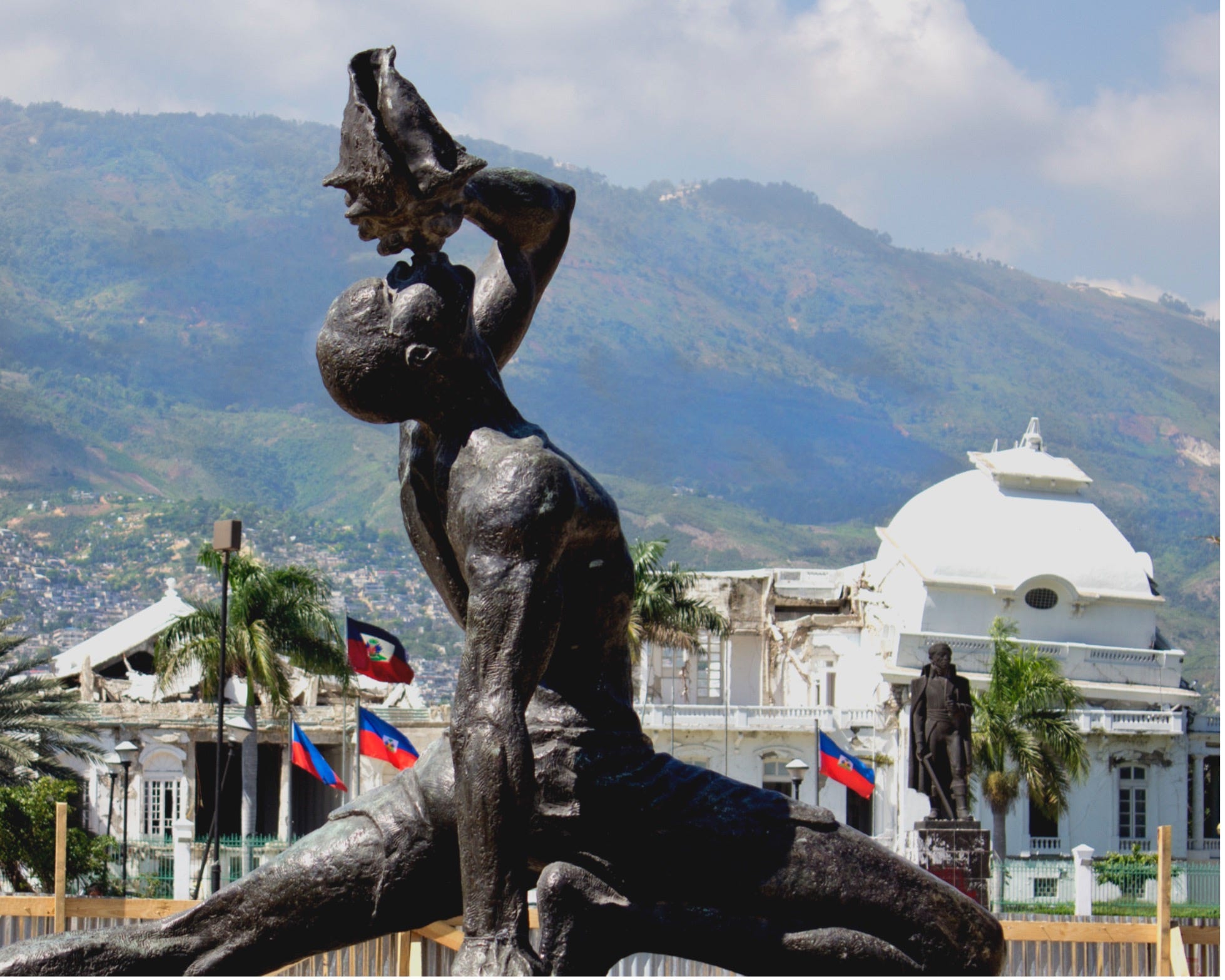
Long before independence was declared in 1804, there were Maroons—men and women who fled plantations, built hidden mountain settlements, organized systems of defense, cultivated land, and governed themselves under constant threat. Marronage was not chaos. It was disciplined autonomy and the refusal to let others determine their fate.
Today, as Haiti stumbles through yet another failed political transition, I find myself asking a different version of a question I have posed for years: have we forgotten how to be Maroons?
A week after the Presidential Transitional Council (CPT) was dissolved, many commentators quickly reached a familiar conclusion, namely that the United States is the primary cause of the entire saga.
Like Pontius Pilate, the Roman governor who ordered Jesus’ crucifixion, the story we tell ourselves minimizes Haitian leaders’ role in the transition fiasco.
In our telling of the tale, it might seem that through our institutions, we were on the brink of finding our own solution. However, Washington pressured our socio-political leaders to travel to Jamaica for CARICOM’s mediation and dictated the CPT’s design. Once installed, Washington compelled the CPT members to engage in corruption, influenced them to turn against one another, and ultimately pushed Laurent Saint-Cyr, serving as coordinator, to ignore the council’s own rules so that Prime Minister Alix Didier Fils-Aimé could stand alone at the helm of executive power.
Taken to its logical conclusion, this narrative absolves us of every failure and reduces Haitians to a nation of permanent minors.
To be clear, I share the strong criticisms of U.S. interference in Haiti’s internal affairs. No foreign government can know what is best for a nation better than its own people. The United States has exercised influence in Haiti, and its recent diplomatic pressure was unmistakable. Yet reducing Haiti’s breakdown to a matter of foreign control is incomplete and disempowering. It also suggests we have no agency.
The reality is that, for most of our history, our own leaders have governed in ways that marginalized and excluded the majority, pushing many of us “andeyò.” Yet we often cling to the narrative that the “blan” controls everything. That story contains some truth, but it is only part of the truth. As Nigerian author Chimamanda Ngozi Adichie warns in her reflection on “the danger of a single story,” when one explanation dominates, it obscures others. Yes, U.S. Chargé d’Affaires, Henry T. Wooster, has shown little restraint in inserting himself in Haiti’s affairs. But it is equally true that Haitians can show great agency when they have to turn against one another, but far less when the task is to build institutions that endure.
Influence Is the Currency of Nations
In an October 2025 interview on Al Jazeera’s UpFront, Haitian-American scholar and activist Jemima Pierre forcefully argued for Haiti’s sovereignty and urged foreign powers to “leave us alone” so Haitians can manage their own crises. In theory, I agree with her because sovereignty requires space. But in practice, her stance overlooks the reality that countries constantly seek to influence each other, driven by either benevolent aims or self-interest.
It would be naive to think that the Dominican Republic, sharing an island and border with Haiti, would not attempt to influence its political or economic path. Venezuela’s Petrocaribe program was promoted as a gesture of solidarity, and it indeed was, but it also served to expand President Chávez’s influence throughout the region.
We have also extended our influence beyond our borders. We take pride in having supported liberation movements throughout Latin America in the nineteenth century. We did not view our actions as interference but as expressions of moral leadership aligned with our interests and values. And rightly so.
The pattern of nations using their influence is evident across continents. Rwanda exerts influence in the DRC, Egypt intervenes in Sudan’s internal conflict, and Ethiopia shapes events in Somalia. Regional powers pursue their interests; this is statecraft, not aberration. It is neither right nor wrong. It just is.
To believe the United States would not seek to influence Haiti—whether because of migration flows, security concerns, or broader hemispheric posture—is to willfully ignore how states operate.
Living in the Shadow of American Power
Since 1823, when President James Monroe articulated what became known as the Monroe Doctrine, the United States has claimed a special role in the Western Hemisphere. Originally framed as a warning to European powers not to interfere in the Americas, the doctrine evolved into a broader assertion that Washington has both the right and responsibility to shape political outcomes in its near abroad.
That logic has resurfaced repeatedly in different forms. More recently, under President Trump, a more assertive interpretation of this posture reemerged. Washington would act decisively in the region to protect its strategic and political interests. Whether in Venezuela, Cuba, or elsewhere, the message was clear: the United States would exert pressure within what it considers its sphere of influence.
I have heard the argument that Haiti should pivot toward China or Russia. This is a deeply flawed and strategically reckless argument. Great powers do not offer partnership without expectation. More importantly, aligning with Washington’s rivals inside its own hemisphere would not insulate Haiti from pressure; it would invite greater confrontation.
However, living in the shadow of the United States does not mean living without agency. Jamaica and the Dominican Republic have shown that nations can exercise agency while navigating rough geopolitical waters. Both engage with China but also understand the limits of that engagement lest they find themselves in direct confrontation with the U.S.
The problem is not that powerful countries pursue their interests; that is what states do. The problem is that Haiti’s internal divisions make outside intervention easier and more decisive than it should be. When Saint Kitts and Nevis, a country with fewer than 50,000 people—smaller than Thomazeau, a commune in Croix-des-Bouquets—can rattle us with its immigration policy, it says less about their power than about our decline.
The Test Before Us
The CPT was presented as a Haitian solution to the Haitian crisis. Its mandate was clear: restore security, convene a national dialogue, and prepare the country for credible elections. Instead, it dissolved into rivalry, procedural maneuvering, and allegations of corruption. It failed not because the tasks were impossible, but because its members could not rise above factionalism. In doing so, all nine members consigned their names to the wastebasket of history due to their actions or silence.
While blaming Washington may provide emotional relief, it does not change the fact that we have entered another transition with an all-powerful Prime Minister. Countries will pursue their interests. That is the nature of international politics. What determines whether external influence becomes decisive is the strength or weakness of our own institutions. When we are divided, outside pressure prevails. When we are disciplined and unified, it does not.
The Maroons understood this instinctively.
They did not deny the empire's power, nor did they pretend it would vanish. They organized under threat, built parallel systems of governance, and cultivated discipline long before demanding recognition. Autonomy was not granted to them. It was built from the ground up—through organized resistance, cultivated land, and governance systems they created themselves. What they constructed through discipline, they sustained through unity, maintaining their freedom until the broader struggle for independence succeeded.
Finding our inner Maroon today means accepting that sovereignty cannot be defended without internal coherence. It means rejecting the comfort of a single story that assigns blame outward while avoiding responsibility inward. It means acknowledging that we live in the shadow of a superpower, while refusing to behave as if we are powerless.
Haiti is not a helpless country. It is a divided one. And that division is our doing, not our destiny. Every time we choose faction over nation, grievance over progress, personal advantage over collective strength, we reinforce the very weakness that makes external pressure so effective. This is not fate. It is a choice.
In my next post, I will turn to the opportunity before Prime Minister Fils-Aimé to shape history rather than drift through it. I will outline three priorities that are evident to most observers and consider how Haitians abroad can help build the discipline and legitimacy required to reclaim our agency.
Many Haitians living in Haiti don’t seem to value coherence or collaboration. I remember during my entire primary and secondary education there, we never once worked in small groups or were asked to collaborate as a team. Everything was based on individual effort. As a result, the strong students stood out while the weaker ones fell behind; and in the end, no one truly won. I hope future leaders will adopt a different approach and come to understand what it really takes to succeed.
Despite this lack of cohesion, I often ask: why not start by identifying just five things that everyone can agree on and actually get them done? In a country like Haiti, finding five clear priorities for the government to focus on shouldn’t be that difficult. If we can’t learn to work with each other, no matter what external help we seek will ever lead us to achieve what we are capable of.